A marine capstan is a vertical mechanical device used on ships, docks, and offshore platforms to handle lines, cables, and ropes during various deck operations. Known for its compact structure and efficient pulling power, the capstan plays an important role in mooring operations and other tasks that require controlled tension and rotation. Modern marine capstans are engineered to deliver strong, stable performance across a wide range of maritime applications.
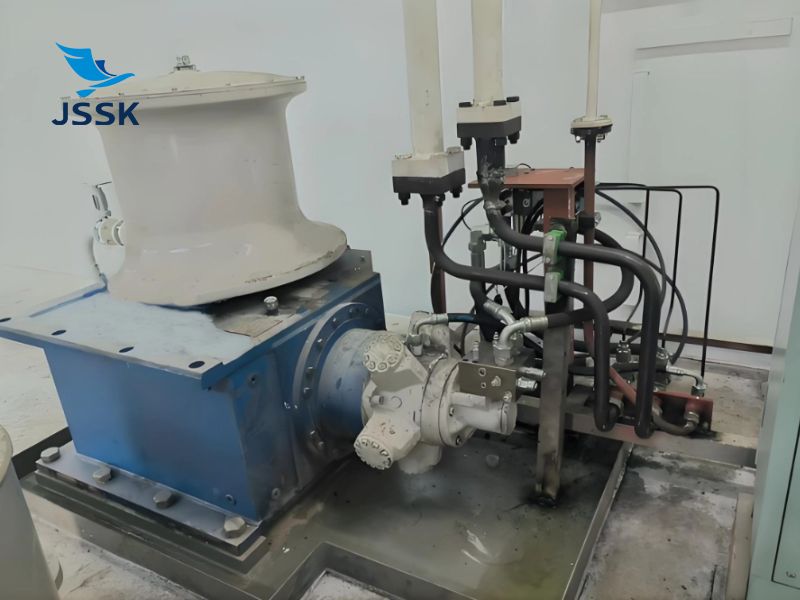
A marine capstan is a rotating vertical drum powered by an electric, hydraulic, or pneumatic system. It is designed to haul, heave, or pay out ropes and cables with consistent, controlled force. Unlike a winch, which stores rope on its drum, a capstan works by providing friction on the rope while the operator manually guides it.
This makes the marine capstan ideal for frequent, short-distance pulling requirements, especially in mooring operations, anchoring assistance, cargo handling, and line control.
Marine capstans come in different configurations to match a wide range of vessel sizes and operational needs.
A high-performing marine capstan typically includes:
Marine capstans serve a wide range of purposes across the maritime industry:
Their efficiency, compact size, and versatility make them indispensable in daily marine activities.
The capstan operates by rotating its vertical drum. The operator wraps the rope around the drum two to three times, using friction to pull the load. As the drum rotates, it tightens and hauls the line while the operator maintains tension and direction.
Power can be adjusted depending on the required load, making the capstan suitable for delicate or heavy-duty tasks.
To ensure long service life and safe performance:
Q1: What is the difference between a capstan and a winch?
A: A capstan has a vertical drum and does not store rope, relying on friction to pull lines. A winch has a horizontal drum that stores rope and handles heavier, continuous loads.
Q2: Can a marine capstan be used for anchoring?
A: Yes. Smaller vessels often use capstans to assist with anchor retrieval, though larger vessels use dedicated windlasses for full anchoring duties.
Q3: Are hydraulic capstans better than electric capstans?
A: Hydraulic capstans provide more continuous power and are ideal for heavy-duty mooring operations. Electric capstans are more economical and sufficient for light to medium workloads.
Q4: What materials are recommended for a marine capstan?
A: Stainless steel, bronze, and marine-grade alloys are preferred for corrosion resistance and long-term durability.
Q5: Does a capstan require skilled operation?
A: Yes. Operators must manage line tension manually, so training and safety awareness are important during use.
A marine capstan is an essential deck device designed for reliable, controlled pulling in mooring operations and many other maritime tasks. With its compact structure, strong torque, and adaptability across a wide range of applications, the capstan remains a key component for safe and efficient vessel handling.
Proper operation, routine maintenance, and choosing the right type of capstan ensure dependable performance in even the most demanding marine environments.
