Marine mooring equipment includes the tools, devices, and hardware used to secure a vessel to a dock, buoy, offshore platform, or seabed. These components work together to keep a ship stable against wind, current, waves, and vessel movement. A properly designed mooring system ensures safety, stability, and reliability in various marine environments, from shallow harbors to deep offshore locations.
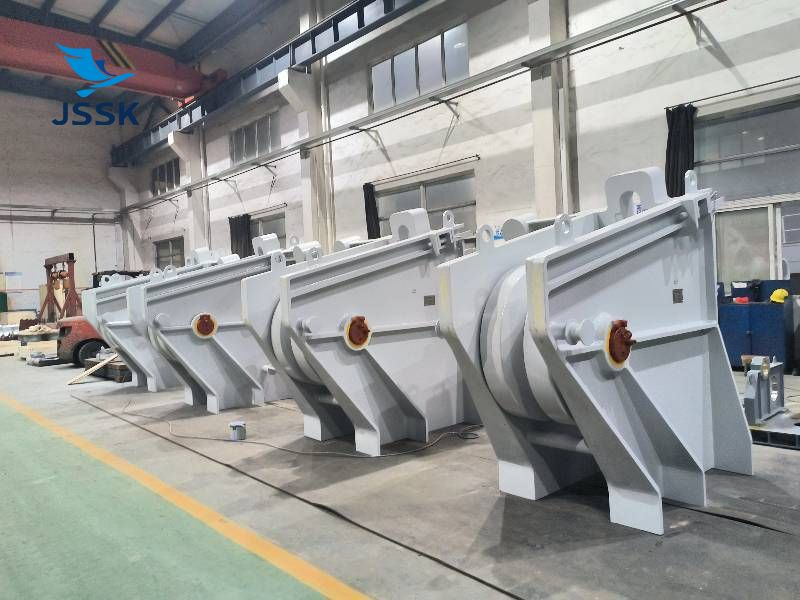
Marine mooring equipment refers to the full collection of fittings, ropes, chains, anchors, and mechanical devices used to connect a vessel to a fixed point. Its function is to resist movement and maintain vessel positioning.
Mooring systems must withstand dynamic loads, accommodate changing water depth, and handle environmental stress. In heavy duty offshore operations, mooring equipment is designed to perform reliably under extreme weather and deep-water conditions.
Marine mooring involves a wide range of specialized equipment. The primary components include:
A mooring line is the rope, chain, wire, or synthetic cable used to secure the vessel.
Anchors provide holding power by embedding into the seabed. Offshore systems use drag anchors, suction anchors, or pile anchors for heavy duty loads.
Used in offshore mooring systems to support lines, absorb tension, and maintain the proper line profile in deep water.
Winches handle the tensioning, paying out, and storing of mooring lines.
Hydraulic winches are common for heavy duty applications.
Guide the mooring line to prevent abrasion and ensure smooth line handling.
Fixed fixtures onshore or on deck where the mooring lines are secured.
Various mooring systems are used depending on vessel type, operational purpose, and water depth.
Used for tankers loading or offloading at sea. Includes a floating buoy system connected to the seabed by multiple anchors.
Common for ships at port, using several mooring lines arranged symmetrically for stability.
Used in offshore platforms where anchors and mooring lines radiate outward to hold the structure in place.
Combines mooring lines with thrusters for precise control in sensitive operations.
Designed for ultra-deep water depths, often using synthetic fiber ropes and floatation modules.
To select the right mooring equipment or system, several factors must be evaluated:
Choosing correctly prevents accidents, reduces wear, and maintains vessel stability.
Marine mooring equipment supports a broad range of maritime operations:
Q1: What is the purpose of a mooring system?
A: Its purpose is to secure a vessel or floating structure in position, resisting movement caused by waves, wind, and currents.
Q2: How many mooring lines does a vessel need?
A: This depends on vessel size, port requirements, and weather conditions. Larger ships typically use six to ten mooring lines.
Q3: What type of mooring line is best for deep water?
A: Synthetic fiber ropes (e.g., polyester, HMPE) are preferred for deep water depth mooring systems due to their strength and low weight.
Q4: What makes mooring equipment “heavy duty”?
A: High load capacity, corrosion resistance, robust materials, reinforced construction, and ability to withstand extreme environmental forces.
Q5: How do I select the right mooring system for my vessel?
A: Evaluate the operational environment, water depth, vessel displacement, safety requirements, and durability expectations to select the right mooring system.
Q6: What causes mooring line failures?
A: Abrasion, overloading, improper installation, corrosion, and environmental fatigue are the most common causes.
Marine mooring equipment forms the backbone of safe vessel positioning. From mooring lines and anchors to winches and buoy systems, every component plays a critical role in maintaining stability across a wide range of marine operations.
Choosing the correct gear—especially for varying water depths, environmental conditions, and heavy duty requirements—ensures reliable performance and long-term safety for all marine activities.
