A marine windlass is an essential piece of equipment on ships and boats used to handle the anchor and its chain, collectively known as the anchor and rode. This mechanical device makes anchoring operations safer, faster, and more efficient by providing the power needed to raise or lower heavy anchors that would be impossible to manage manually.
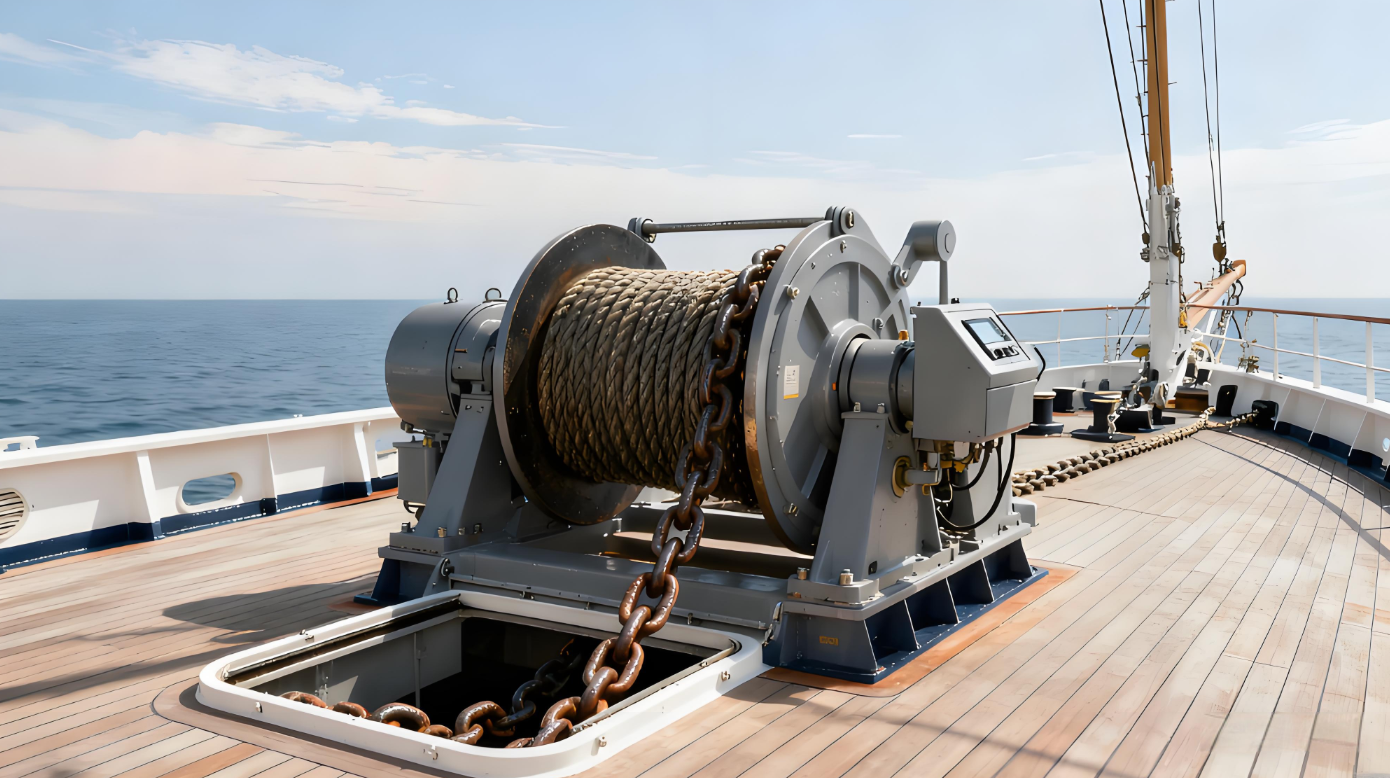
A marine windlass is a mechanical or hydraulic device used to lift, lower, and secure a vessel’s anchor and rode. It consists of a drum or gypsy that grips the anchor chain, powered by an electric, hydraulic, or manual drive system.
The primary purpose of a windlass is to control the deployment and retrieval of the anchor in a controlled manner, ensuring stability and safety during anchoring operations in varying sea conditions.
Marine windlasses can be categorized based on their configuration and installation style. The two main types are horizontal windlasses and vertical windlasses, each with distinct structural and functional characteristics.
A horizontal windlass is mounted on the deck with the motor and gearbox above deck level. The chain runs horizontally through the gypsy wheel.
A vertical windlass has its motor and gearbox located below deck, while only the gypsy and capstan are visible above deck. The chain moves vertically through the gypsy into the chain locker.
Anchor windlasses play a central role in the vessel’s anchoring system. They connect directly with the anchor and rode, which includes the anchor, chain, and rope that hold the vessel in place.
A properly matched windlass ensures smooth operation of the anchor and maintains safety when setting or retrieving it. Factors such as chain size, anchor weight, and vessel displacement must be considered when selecting an appropriate windlass.
Proper operation of a marine windlass involves controlled release and retrieval of the anchor while monitoring chain tension and vessel movement. Safety features like overload protection and emergency release mechanisms prevent equipment damage and ensure crew safety.
Operators should avoid using the windlass to hold the vessel’s full anchoring load. Instead, a chain stopper or brake should bear the static tension once the anchor is set.
Q1: What is the difference between a capstan and a windlass?
A: A capstan is primarily used for handling rope or mooring lines, while a windlass is specifically designed to lift and lower the anchor and chain. Some modern windlasses include a capstan drum for dual functionality.
Q2: How do I choose the right windlass size for my boat?
A: Choose a windlass based on your vessel’s anchor weight, chain size, and displacement. Manufacturers provide charts matching windlass models to anchor systems.
Q3: What’s better — horizontal or vertical windlass?
A: Horizontal windlasses are easier to maintain and ideal for shallow chain lockers. Vertical windlasses save space and provide a cleaner deck layout but may require more complex installation.
Q4: Can one windlass handle two anchors?
A: Some large vessels use double anchor windlasses, which are specially designed with two gypsies to handle two anchors simultaneously.
Q5: How often should I service my windlass?
A: Routine cleaning after each use and a full inspection every six months are recommended. Heavy-duty or commercial windlasses may require quarterly servicing.
A marine windlass is a vital component of any anchoring system, ensuring safe and reliable handling of the anchor and rode. Whether using a horizontal windlass or another configuration, selecting and maintaining the right anchor windlass improves safety, efficiency, and overall vessel performance.
Proper understanding and regular maintenance of your windlass system ensure smooth anchoring operations and long-term reliability at sea.
